02.04.2025
Webinars
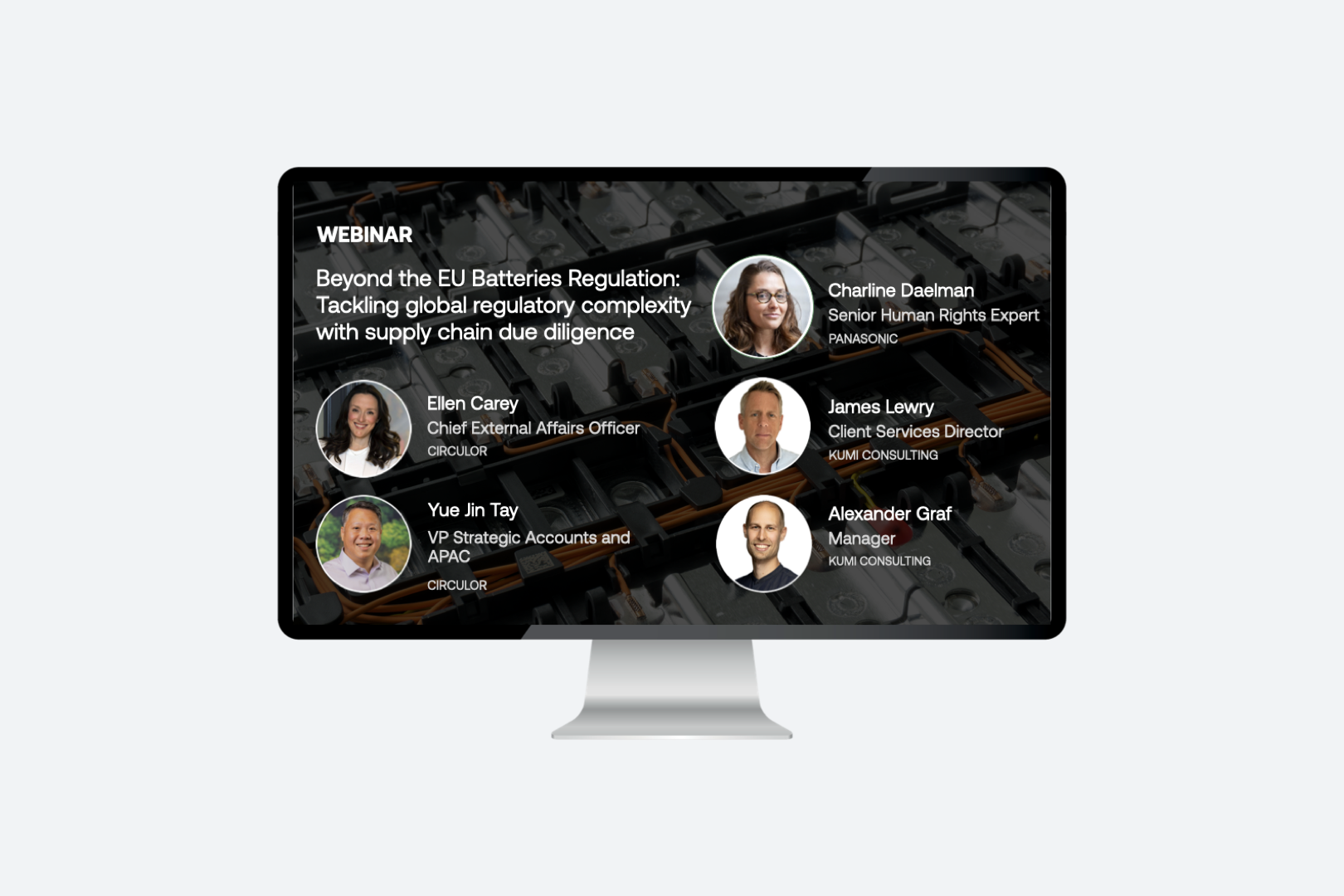
FAQs - Tackling global regulatory complexity with supply chain due diligence
The EU Omnibus has indicated significant potential changes for CSDDD. What impact will this have on the EUBR's due diligence requirements?
The EUBR is currently not included in the Omnibus and although future simplification packages planned by the Commission may do so, no substantial changes are expected as of now. Despite uncertainties, we strongly advise companies to continue preparation for their due diligence requirements. In particular, one should follow international frameworks such as the OECD Due Diligence Frameworks and UNGPs that underpin all of the current EU due diligence legislation.
When will the EUBR due diligence guidelines be published?
Although the EUBR is not part of the current Omnibus negotiations and simplification packages, while negotiations are ongoing, there is currently no confirmed timeline for the publication of the EUBR guidance.
Can we expect the 18 Aug 2025 deadline for due diligence compliance to be pushed out given delays from the European Commission?
The EUBR due diligence requirements apply from August 18, 2025, no changes to the deadline are known. However, it is likely that notified bodies will not be available in time, in which case third party verification would be postponed until they are in place. The remaining due diligence obligations are still due by August with the exception of public reporting, which is expected to be in force only by August 2026.
Have the Notified Bodies been confirmed?
Notified bodies have to verify due diligence compliance and currently, no notified bodies have been confirmed and communicated, which means that this requirement will be enforced only once available. The European Commission and Member States are still setting up the process for approving notified bodies.
We strongly suggest companies continue preparing due diligence requirements rather than waiting for the notification of bodies as adequate implementation requires sufficient lead time, and all other requirements will still be in effect by August 2025, and the first public report is expected to be due by August 2026.
Does third-party verification apply only to the due diligence processes or does each annual report also need to be verified by a third-party?
The notified body will be responsible for periodically verifying an economic operator's implementation of all due diligence requirements listed in Articles 49, 50 and 52, including the performance of implementation and reporting.
Can the reporting obligation under the EUBR be included in other annual non-financial reporting by the company?
The reporting obligations under the EUBR can be combined with other company reporting obligations, e.g., CSRD. It is important to ensure that the full scope of requirements, risks, raw materials and supply chain stages required under the EUBR are covered.
How important is the role of 2nd life batteries? How can supply chain transparency enable this?
The role of 2nd life batteries is very important in decabonizing, diversifying power markets and securing critical minerals. The supply chain data, coupled with data in the battery passport, will enable faster and more efficient pathways to second life and ultimately recycling.
How deep should the companies go in their supply chains and where are the key risks?
The EU Battery Regulation states that this must be back to source for both primary and secondary materials, so either the mine site or waste source into recycling facilities. This is to ensure risks in the upstream are identified, managed and mitigated.
The materials in scope of the EUBR due diligence requirements are cobalt, lithium, nickel and natural graphite given they’re the most common and high-risk materials in batteries.
What approach can companies take when upstream suppliers refuse or are unable to provide necessary information?
From our experience, collaborating with a neutral third-party traceability provider may support economic operators in engaging with their suppliers. Circulor's established network of battery value chain participants creates efficiencies for new customers. In principle, we recommend collaboration with suppliers to foster understanding regarding the purpose and need of supply chain transparency, including data required under the EUBR. In cases of continued non-cooperation without significant improvement, economic operators should consider long-term business strategies, including the potential suspension or termination of business relationships.
How can we design and implement robust confidentiality protocols that enable effective data sharing across the battery supply chain while ensuring that proprietary information and trade secrets are fully protected and competitive positioning is maintained?
The definition of business confidentiality and confidential data varies among companies and across different national jurisdictions. Consequently, a one-size-fits-all approach is not feasible. By nature, there is a trade-off between transparency and confidentiality; however, specific mechanisms can mitigate this tension. For example, economic operators do not require comprehensive access to all information from the start, nor do they need access to all documentation required to verify the chain of custody information.
For instance, neutral third parties can assess, verify, and confirm data validity without disclosing confidential information to economic operators. How much information needs to be disclosed to the economic operator depends on the risk profile of a supplier and its supply chain, as well as the ability to give assurances that risks are managed appropriately. Ultimately, it is the economic operator who has to decide whether the provided information is sufficient since it bears the responsibility under the law, which cannot be shifted.


![Acculon RA Circulor - website image.001[44].png](/_next/image?url=https%3A%2F%2Fdecisive-wonder-fa24533282.media.strapiapp.com%2FAcculon_RA_Circulor_website_image_001_44_2720fb315d.png&w=1920&q=75)